
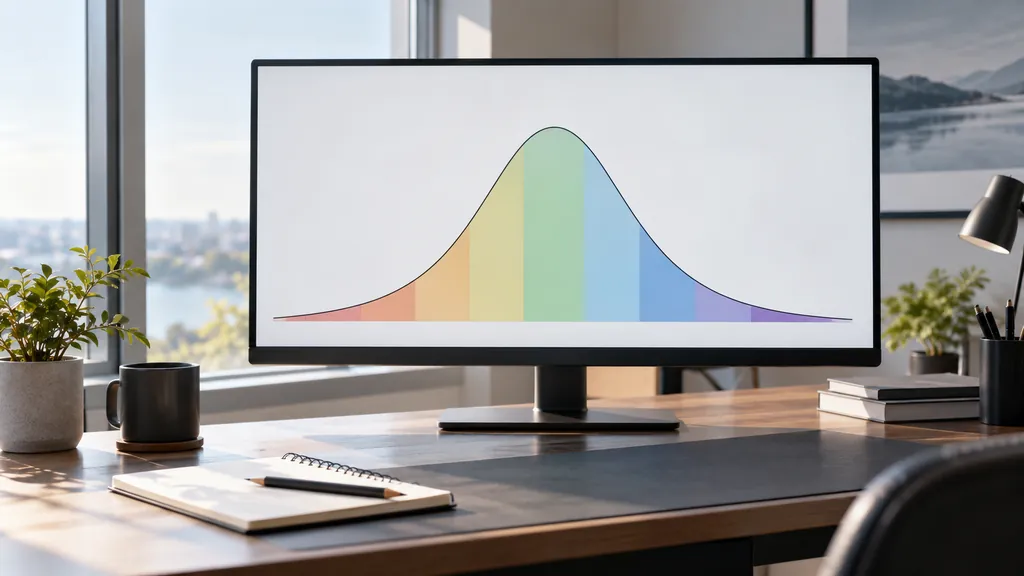
The R6 rank distribution is the answer to a question every ranked player asks sooner or later. If I’m Platinum, am I actually good, or just average? It’s a fair question, and it deserves an honest answer, which starts with something many websites skip. Ubisoft doesn’t publish official rank percentages for Rainbow Six Siege, so any exact “X% of players are Gold” figure you see is an estimate, not a fact.
That doesn’t make the question pointless. You can still understand how the rank tiers relate to each other, what shape a ranked ladder usually takes and roughly where a given rank sits in the player base. This guide walks through all of that, explains how third-party sites build their estimates and why those samples lean in predictable directions, and shows you how to judge your own rank without leaning on numbers nobody can verify.
What an R6 rank distribution actually describes
An R6 rank distribution is simply a count of how many ranked players sit in each rank at a given moment. Picture eight buckets, Copper through Champion, and drop every active ranked player into the bucket that matches their current rank. The heights of those buckets are the distribution. With the Legend Division above Champion since Y11S3 Split Fire, there’s now a small, gated group sitting above the eighth bucket too.
Under Ranked 3.0, each of the eight ranks has five divisions, including Champion. That’s 40 divisions in total, so a finer-grained R6 rank distribution could show 40 buckets instead of eight. Most people talk about rank tiers at the rank level, though, because that’s how players naturally compare themselves with the rest of the player base.
Two details matter straight away. First, only ranked players count. Ranked needs a paid edition and player level 50, so free access players who stick to Quick Match, Unranked or Dual Front aren’t in the picture. Second, the distribution is a moving snapshot. It changes every day of a season as people play, climb, drop and stop playing.
Why there are no official R6 rank distribution percentages
Ubisoft publishes plenty about how ranked works, from the rank names to placement matches and squad limits, but it doesn’t publish the share of the player base in each rank. You can read the rules in the official Ranked 3.0 announcement, and you won’t find a percentage table there.
Ubisoft also hasn’t published Ranked 3.0 RP thresholds in that announcement. Under Ranked 2.0 it did say each division consisted of 100 RP, but it hasn’t confirmed what Ranked 3.0 uses. So be cautious with any site that pairs exact percentages with exact RP cut-offs and presents both as official. At least one of those numbers is coming from somewhere other than Ubisoft.
That’s the honest starting point. Everything below is about understanding the shape and meaning of the R6 rank distribution, not about pretending to know the exact split across the player base.
How third-party sites estimate the R6 rank distribution
Stat trackers collect data on the profiles that get searched on their sites. Some of them count the ranks of those tracked profiles and publish the result as a rank distribution. It’s a reasonable thing to do, and it can show a useful shape, but it measures “players this site has seen”, not the whole player base.
Why tracked samples lean toward higher rank tiers
Think about who looks up their stats. Players who care about ranked, who climb, who watch streamers and who check their K/D after every session. Those people tend to sit in higher rank tiers than the average ranked player. Casual players who hop into a few ranked matches a season and never visit a tracker barely appear. The result is a sample that usually skews upward, making mid and high ranks look more common than they really are.
Other biases in any R6 rank distribution estimate
- Platform mix. Some trackers are used far more on PC than on console, and PC and console ranks are separate ladders.
- Season timing. A snapshot early in a season looks very different from one near the end, because many players haven’t finished placements or climbed yet.
- Inactive accounts. A site may keep counting profiles that played one match and stopped.
- Multiple accounts. One person with two accounts can be counted twice, at two different ranks.
- Missing data. Fan trackers can miss matches or update late, so some ranks lag behind reality.
None of this means tracker estimates are useless. It means you should read them as “a biased sample with a plausible shape” and never as the true split of the player base.
How the rank tiers compare to each other
Even without percentages, you can compare rank tiers by what they usually represent in the player base. The table below describes each rank in terms of what it tends to say about a player relative to the player base. It’s a qualitative guide, not a set of cut-offs.
| Rank | Where it usually sits | What it tends to mean |
|---|---|---|
| Copper | Bottom of the ladder | New to ranked, learning maps, or struggling with fundamentals |
| Bronze | Lower tiers | Basic mechanics in place, inconsistent decisions |
| Silver | Lower middle | Knows common sites, still loses many gunfights to positioning |
| Gold | Middle of the ladder | Solid core of the ranked player base, uneven utility use |
| Platinum | Upper middle | Good mechanics and map knowledge, decent teamwork |
| Emerald | Upper tiers | Consistent, plays with intent, punishes mistakes |
| Diamond | High tiers | Strong all-round player, smaller and harder lobbies |
| Champion | Top rank | Very strong, a small slice of ranked players |
Above the table sits the Legend Division, which launched with Y11S3 Split Fire and replaced the featured Champion leaderboard. It’s gated by past results, the R6 ShieldGuard Secure Platform and app-based 2-Step verification, so it’s a very small group by design. Our R6 leaderboard guide explains how to read it.
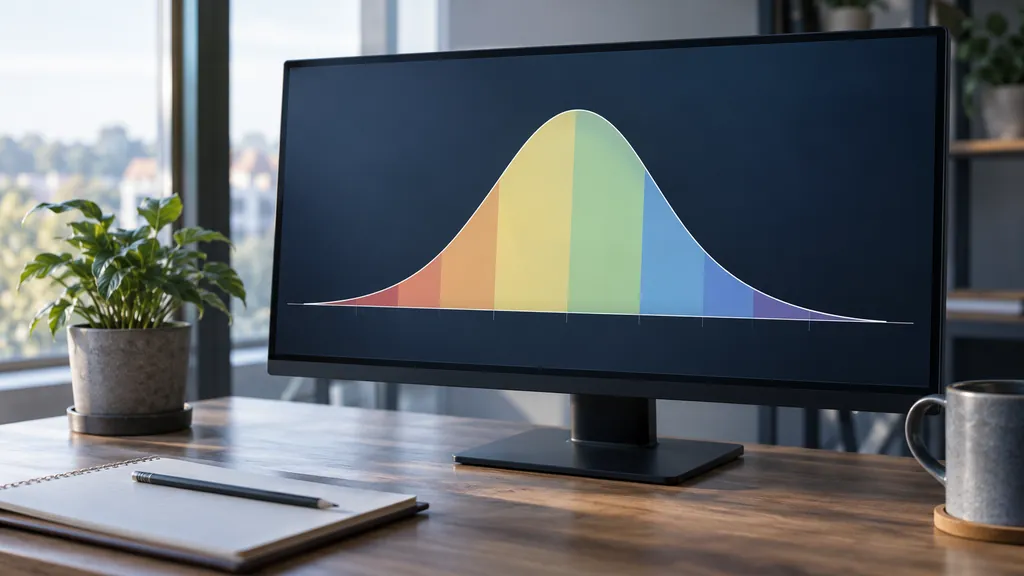
The pattern behind the table is simple. The middle rank tiers hold most of the ranked player base, and each step toward the top gets thinner. That’s how competitive ladders are usually shaped, because the gap between “good” and “very good” is much harder to close than the gap between “new” and “decent”.
The bottom is a little different. How crowded Copper and Bronze look depends on the point in the season and how new accounts enter ranked, so the low end of any R6 rank distribution moves around more than the top.
What your rank means relative to the player base
The most useful way to think about rank is as a rough percentile band. If you’re in Gold, you’re probably somewhere around the middle of ranked players on your platform. Platinum and Emerald usually put you above most of the player base. Diamond and Champion put you among a relatively small group at the top. You don’t need exact numbers to make sense of that.
Keep the denominator in mind, though. You’re being compared only with people who play ranked, which already excludes a big chunk of the wider Siege community. A Silver ranked player may be a lot better than the average person loading into Quick Match, because ranked itself is a self-selected group.
Why the top rank tiers feel so far apart
Climbing from Silver to Gold often feels like a few good weekends. Climbing from Diamond to Champion can take a whole season, or never happen. That’s the shape of the R6 rank distribution at work. As the rank tiers thin out near the top, every lobby is full of players who have already fixed the obvious mistakes, so each extra win is harder to earn. The squad limit adds to it, because Diamond and Champion players can only queue with teammates within 2 full ranks, so nobody gets carried far.
PC and console rank tiers are separate ladders
PC and console matchmaking stay separate by default, and your PC rank is kept apart from your console rank. Rank is shared across consoles, so Xbox and PlayStation players sit in one console ladder. Console players can opt into the PC pool and earn a separate PC rank there. That means there are really two distributions, and a Platinum on console and a Platinum on PC are placed relative to different player bases.
Why the R6 rank distribution shifts during a season
An R6 rank distribution taken in week one looks nothing like one taken in the final week. Each season you play five placement matches with boosted RP gains, which moves players quickly toward their level. After that the climb slows down, and the spread across rank tiers settles as more people finish their placements and play enough matches.
- Early season. Lots of players haven’t played ranked yet or are mid-placements, so the snapshot is incomplete.
- Mid season. The shape is most stable, and comparisons are fairest.
- Late season. Dedicated players keep climbing while casual players stop, so the active ladder can look more top-heavy.
The Demotion Shield also plays a small part. If a loss would drop you a division and you started that match above 0 RP, you can be left at 0 RP in your current division instead. That softens drops at division edges, so players cluster a little at the bottom of divisions they’ve just reached.
How to estimate where you sit without official numbers
You can get a decent feel for your place in the R6 rank distribution with a little common sense and no invented figures. The idea is to combine what you know about the ladder’s shape with what you see in your own lobbies.
- Start with your rank, not your division. The rank is enough to place you in the lower, middle or upper rank tiers.
- Check your platform. Compare yourself only with the PC or console player base you actually play in.
- Look at your lobbies. If most opponents share your rank, the system is placing you where it thinks you belong.
- Use mid-season data. Your rank in week one is less reliable than your rank after a few weeks of play.
- Watch your trend. A steady climb across seasons says more than any single snapshot.
For example, imagine Player A finishes three seasons in a row around Platinum on console. Even without a percentage, that pattern tells you Player A sits above most of the console ranked player base and is still a step or two away from the thin top end. Any percentage you attach to that example would be illustrative only, and that’s fine, because the conclusion doesn’t depend on it.
Common misreadings of rank distribution charts
I’ve seen the same mistakes in every Discord argument about the R6 rank distribution. Most come from treating an estimate as an official census.
- Quoting a tracker percentage as fact. It’s a sample of searched profiles, not the full player base.
- Mixing platforms. PC and console ladders are separate, so one combined chart blurs two different worlds.
- Comparing different seasons. Ranked 2.0, Ranked 3.0 and the arrival of Legend all changed the ladder.
- Ignoring season timing. A week-one chart and a final-week chart aren’t comparable.
- Treating rank as a fixed label. Your rank reflects this season’s RP, not a permanent skill score.
If you’d like to follow your own rank through a season instead of reading someone else’s chart, our R6 rank tracker guide shows how to record rank and RP after each session. A quick sanity check helps too. When you see a chart, ask who made it, which platform it covers, which season and what week, and how the sample was gathered. If the page can’t answer those questions, enjoy the shape and ignore the decimals.
Tracking your own place in the rank tiers
The best way to understand where you sit is to watch your own movement through the rank tiers over a season. Siege Tracker is a free website that works in any desktop or mobile browser. It doesn’t pull live data from Ubisoft, and there’s no download, overlay or store app. You enter your own numbers from Ubisoft’s official stats page on ubisoft.com, from post-match reports or from a tracker you use.
The Siege Tracker season tool saves snapshots of your RP, wins, losses, kills and deaths, then shows rank progress and trend charts between sessions. Your data stays in your browser, and you can export, import or delete it whenever you like. Over a season, those snapshots show your path through the rank tiers far more honestly than a chart of the wider player base. To see how typical stats differ across rank tiers and roles, the leaderboards and stats explorer has 20 stat cards and a two-player comparison tool.
Siege Tracker is independent and not affiliated with Ubisoft, and we never ask for your password.
R6 Rank Distribution FAQ
Does Ubisoft publish an official R6 rank distribution?
Not in the material we’ve checked, including the Ranked 3.0 announcement. Ubisoft explains the ranks, divisions, placement matches and squad limits, but not the share of players in each rank. Treat percentage charts from third-party sites as estimates built from the profiles those sites track.
What is the average rank in Rainbow Six Siege?
Without official data nobody can name it precisely. Ladders like this usually hold most players in the middle tiers, so Gold and Platinum are where many ranked players tend to end up on tracker estimates. Remember those estimates skew upward, because players who check trackers often sit higher than average.
Why does the R6 rank distribution on trackers look so high?
Because trackers only see profiles people search. Competitive, climbing players search themselves far more than casual ones, so higher rank tiers are overrepresented. Platform mix and season timing add more skew, so the real spread across the whole player base is likely lower than a tracker chart suggests.
How many players are in each rank tier?
Only Ubisoft knows, and it hasn’t published those counts. Any number you see for a single rank comes from a third-party sample of tracked profiles. Use those numbers to understand the general shape of the R6 rank distribution, and treat the exact figures as rough estimates rather than facts about the whole player base.
Is Champion still the top rank?
Champion is the highest of the eight ranks and now has five divisions under Ranked 3.0. Since Y11S3 Split Fire, the Legend Division sits above it for eligible players and replaces the featured Champion leaderboard.
Making sense of where you sit in the R6 rank distribution
Here’s the short version. Ranks get thinner as you climb, the middle holds most of the player base, and nobody outside Ubisoft knows the exact split. That’s enough to answer the original question. If you’re in Platinum or above, you’re doing better than most ranked players on your platform. If you’re in Gold, you’re in the thick of it, which is exactly where improvement is most visible.
For a tier-by-tier walkthrough of what each rank usually looks like, read our complete ranked tier guide. The Rainbow Six Siege ranks guide covers the full ranking system, and the R6 RP tracker guide explains how to follow Rank Points game by game. Our older rank system explainer fills in the background.
Then start tracking. Save a snapshot in the season tool after your next session and watch your own line move through the rank tiers, which tells you far more than any chart of other people.