
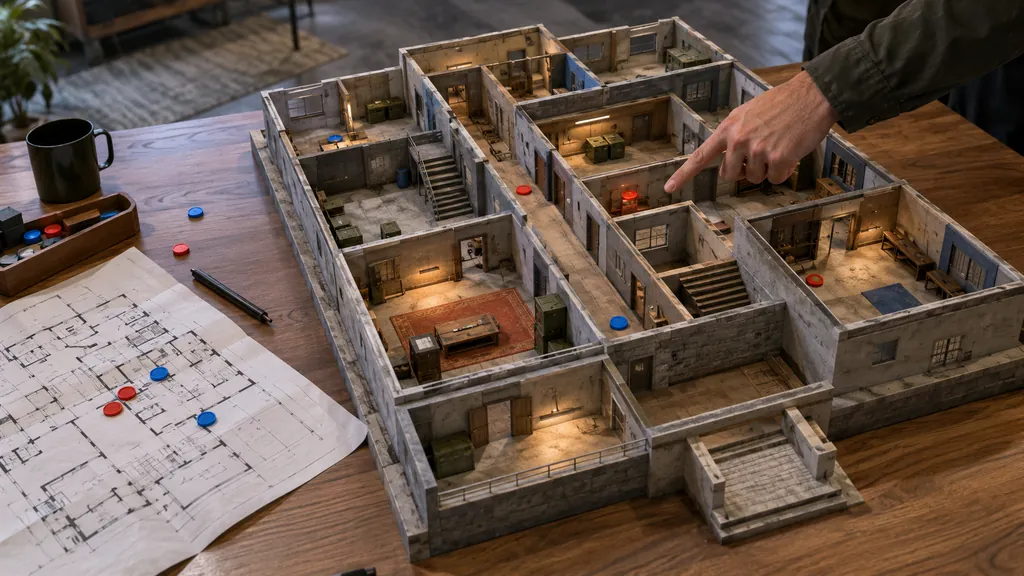
R6 map stats are one of the quickest ways to find out where your rank points are actually going. Most players have a feeling about which maps they like, but feelings are unreliable. You might love Villa and still lose there more often than anywhere else, or grumble about Consulate while quietly winning most of your games on it. The numbers settle the argument.
This guide shows you how to build and read your own map numbers. You’ll learn where to get them, how to work out a fair map win rate, how to separate your best maps from your weakest ones, why attack and defense need to be read separately on each map, and exactly what to practice once you know where you struggle.
We won’t tell you which maps are in the current Ranked pool or which ones are “good” this season. Map rotations and reworks change over time, so check the latest patch notes for that. What follows works for any map you play.
What R6 map stats measure
At its simplest, R6 map stats answer one question. How do you do on each map? The most common measure is a map win rate, the share of matches you win on that map. Better sources, or a careful personal log, also split results by side, showing how many attack rounds and defense rounds you win on each map.
That side split matters because Siege maps aren’t symmetrical in feel. Defending the basement on Bank is a very different job from attacking it, and the skills don’t always transfer. A single overall map win rate can hide the fact that you’re excellent on one side and struggling on the other.
Good R6 map stats also tell you how many games each number is based on. A map win rate from four games is a coin flip. One from forty games is worth acting on. Always keep the sample size next to the result.
Map numbers are also personal. Your results reflect your team, your usual operators and the times you play, not just the map itself. Two players at the same rank can have completely different strong and weak maps, so there’s little point copying someone else’s list. Your own R6 map stats are the only ones that tell you where your practice time should go.
Where to find your R6 map stats
There are three practical sources, and they work best together.
- Ubisoft’s official stats page. Sign in on ubisoft.com and check what it currently shows for your account. The layout can change, so look for yourself rather than relying on a list of fields.
- Third-party trackers. R6 Tracker by Tracker Network is described as offering map and mode breakdowns alongside match scorecards. Trackers are fan-made, may update late or miss games, and change over time, so check current availability.
- Your own log. Writing down the map, result and round score after each game takes seconds and gives you the attack and defense split even if your other sources don’t.
We couldn’t confirm an in-game screen in 2026 that lists your results by map, so don’t count on finding that inside the client. And as always, never enter your Ubisoft password on a stats site. A public profile lookup only needs a username and platform.
Working out your map win rate
The formula is the same one you use for overall win rate, applied to one map at a time. Map win rate = wins on that map ÷ (wins + losses on that map) × 100. If Player A, for example, played 20 games on Oregon and won 12, their map win rate there is 12 ÷ 20 × 100 = 60%. The numbers are illustrative, but the method is exactly what you’d do with your own record.
How many games you need per map
Siege matches are swingy. One game with a disconnect or a stacked enemy squad can distort a small sample badly. As a practical rule, treat anything under ten games on a map as a first impression and wait for twenty or more before making big decisions. These aren’t official cut-offs, just sensible thresholds that keep you from overreacting.
If you play a lot of maps, it can take a while for each one to reach a useful sample. That’s fine. Focus first on the maps you play most often, because that’s where improvement pays off fastest.
Matches versus rounds
You can measure map performance in matches or in rounds. Matches are simpler and match what you care about in Ranked. Rounds give you more data points from the same number of games, and they make the attack and defense split possible. Ideally, track both, with a map win rate by match and rounds won per side.
Finding your best maps and worst maps
Once you have a reasonable sample on several maps, sort them by map win rate. The top two or three are your best maps, and the bottom two or three are your weakest. Before you trust the list, check that each map has enough games behind it.
Your best maps
Your best maps are worth understanding, not just enjoying. Ask why you do well there. Maybe you know the common defensive setups on Clubhouse, or you have a reliable attack plan on Bank that your squad runs without thinking. Whatever it is, that knowledge is a template you can copy to other maps.
It also helps to look at the middle of the list. Maps with an average map win rate and a large sample are often the easiest to improve, because small fixes show up there quickly. A map at the bottom might need weeks of work, while a middling map might move after a single new attack plan.
Write down two or three things you do on your best maps that you don’t do elsewhere. Often it’s simple things like droning specific rooms, holding consistent angles or knowing where defenders usually roam.
Your weakest maps
Weak maps usually come down to missing knowledge rather than poor aim. If you don’t know where defenders typically set up on Chalet, which walls are commonly reinforced on Kafe Dostoyevsky, or how to rotate between sites on Border, you’ll lose rounds before a single bullet is fired.
Be honest about whether a map is weak or just unlucky. If a map has a low map win rate but only a handful of games, keep playing it before concluding anything. If the number stays low over twenty or thirty games, it’s a genuine gap worth working on.
Attack versus defense on each map
This is where R6 map stats become really useful. For each map, split your rounds into attack rounds won and defense rounds won. Then compare. You’ll often find a map where your overall result looks average but one side is clearly carrying the other.
Reading a side split in R6 map stats
Imagine, for example, that Player A wins plenty of defense rounds on Consulate but few attack rounds. Their overall map win rate looks middling, but the real story is a strong defense and a weak attack. The practice plan is obvious. Learn one or two attack plans for Consulate, not general map knowledge.
The reverse happens too. Strong attack but weak defense on a map often means you don’t know the standard setups, reinforcement spots or roaming paths well enough. That’s fixable with focused practice in custom games.
Read side splits alongside your operator picks. If you tend to play a particular defender on one map and your defense is weak there, check whether the operator suits that map. Our guide to finding your best attackers and defenders covers how to judge operators fairly.
An example R6 map stats sheet
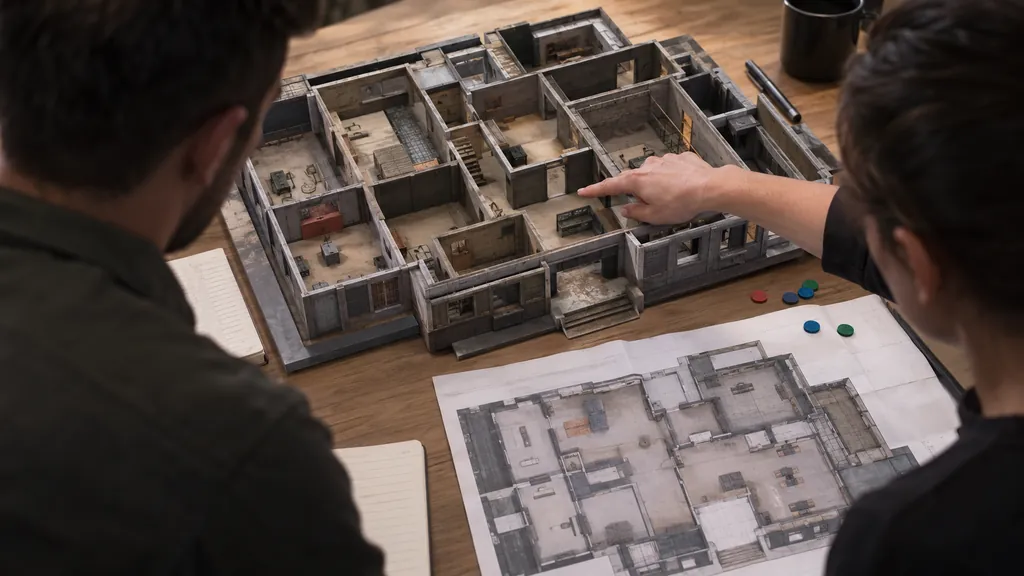
Here’s a simple layout for tracking your map win rate and side split. The numbers are illustrative for an example player and only show how the sheet works, not real data or a ranking of maps.
| Map | Games | Map win rate | Attack rounds won | Defense rounds won | Focus |
|---|---|---|---|---|---|
| Clubhouse | 24 | 58% | Balanced | Balanced | Keep as a best map |
| Oregon | 20 | 60% | Higher | Lower | Learn one defense setup |
| Bank | 22 | 50% | Lower | Higher | Practice one attack plan |
| Chalet | 18 | 39% | Lower | Lower | Callouts and site layouts |
| Villa | 6 | 33% | Too few | Too few | Play more before judging |
Notice the Villa row. With six games, the result is not a verdict. Marking small samples clearly stops you from treating a hunch as a fact.
What to practice on a weak map
Once you know which maps and sides need work, keep practice narrow. Trying to learn everything about a map at once rarely sticks. This order works well for most players.
- Learn the callouts. Your team can’t help you if you can’t tell them where the enemy is.
- Learn the sites. Know where each objective sits and how the rooms around it connect.
- Learn one default defense setup per site. Reinforcements, utility placement and where an anchor usually stands.
- Learn one attack plan per site. Where to drone, which wall to open and where to plant.
- Learn rotation paths. How defenders move between rooms and how attackers can cut them off.
Custom games are perfect for the first three steps because you can walk the map without pressure. Then use Quick Match or Unranked to try plans against real players before taking them into Ranked.
After two or three weeks of focused work, check your R6 map stats again. If the map win rate on your target map has moved, even a little, over a fair sample, the practice is working.
Watching back your own games helps too, if you record them. Pick a lost round on your target map and ask what you knew and didn’t know at each moment. Most of the time the missing piece is information, such as where a defender was, which wall was open or how much time was left. That’s exactly the kind of knowledge focused practice can supply.
Using your best maps in squad and solo play
Your R6 map stats get even more useful when you share them with a regular squad. Compare notes and you’ll often find that your best maps overlap with some teammates and not others. A squad that knows which maps it wins together can plan practice around the gaps instead of guessing.
Agree on a short set of plans for your squad’s best maps, such as a default attack on each site and a standard defensive setup. Consistency is what makes those maps strong, so write the plans down and stick with them for a few weeks before changing anything.
Solo players can use the same idea. If your solo map win rate on a map is much lower than your squad number there, the map probably relies on coordination you don’t get in solo queue. For example, Player A might win often on Border with friends but struggle alone, which points to communication rather than map knowledge. Focus solo practice on self-sufficient habits like droning for yourself and holding safer angles.
Keep solo and squad results in separate columns. Mixing them can make one of your best maps look average, or hide a map that only works when your friends are online.
Common mistakes with map win rate
- Judging from a few games. Small samples swing wildly. Mark them clearly and keep playing.
- Mixing modes. Ranked, Unranked, Quick Match and Dual Front play differently, and Dual Front uses its own map, District. Keep modes separate.
- Ignoring the side split. An average overall number can hide a big gap between attack and defense.
- Forgetting map changes. Reworks and rotation changes can make old results less relevant. Check the official season list and patch notes when a new season starts.
- Avoiding weak maps forever. Dodging a map protects your numbers but doesn’t fix the gap.
The fix for almost every mistake is the same. Play more games, keep them in separate groups and read each map win rate with the sample size in view.
Free tools to support your R6 map stats
Our tools don’t connect to Ubisoft or pull map data automatically. You type in your own numbers from the official stats page, a tracker or your log, and everything stays in your browser.
The K/D and win rate calculator is a quick way to work out a map win rate from wins and losses. For overall progress across sessions, the Siege Tracker season tool saves snapshots of your totals and shows the changes between them, so you can see whether map practice is lifting your overall results.
If you’re still building your record, start with our guide on checking your previous matches, then read how to review recent matches for patterns. To check a batch of games on one map in more detail, the stat analyzer on our player stats page works out K/D, win rate, headshot percentage and kills per round from six numbers. For the bigger win and loss picture, our win rate tracking guide fills in the rest.
R6 map stats FAQ
How many games do I need for reliable R6 map stats?
There’s no official number, but under ten games on a map is only a first impression, and twenty or more gives you something worth acting on. Siege matches are swingy, so small samples mislead easily. Focus on the maps you play most often first, because they reach a useful sample fastest and improvement there pays off sooner.
What is a good map win rate?
Compare each map with your own overall win rate rather than a fixed target. A map clearly above your average, with a decent sample, is one of your best maps. A map clearly below it is a candidate for practice. Your overall level, the mode you play and your squad all change what “good” looks like for you.
Why is my map win rate so different on attack and defense?
Attack and defense on the same map use different knowledge. Defending needs setups, reinforcements and rotations. Attacking needs droning, breach points and plant spots. It’s common to be comfortable on one side and lost on the other. Split your rounds by side and practice the weaker one with a single plan per site.
Do R6 map stats include Dual Front?
It depends on the source, so check how your tracker or the official page groups modes. Dual Front is a separate 6v6 mode on its own map, District, with respawns and mixed teams. Its results aren’t comparable to standard Ranked or Unranked maps, so keep them in their own group in your log.
Should I avoid maps with a low map win rate?
Avoiding a map protects your numbers in the short term but leaves the gap in place, and you’ll keep running into it whenever it comes up. A better approach is to keep playing it while practicing one plan at a time in custom games. Once your map win rate there starts to climb over a fair sample, the time you spent pays back every time that map appears.
Turning R6 map stats into a practice plan
R6 map stats are only useful if they change what you do. Find your best maps and copy what works there. Find your weakest map, split it by side, and practice one site plan at a time. Then check again after a few weeks.
Siege Tracker is independent and not affiliated with Ubisoft, and it never asks for your password. For a broader plan that ties maps, operators and habits together, read our guide on improving your K/D, win rate and rank and pick one map to work on this week.