
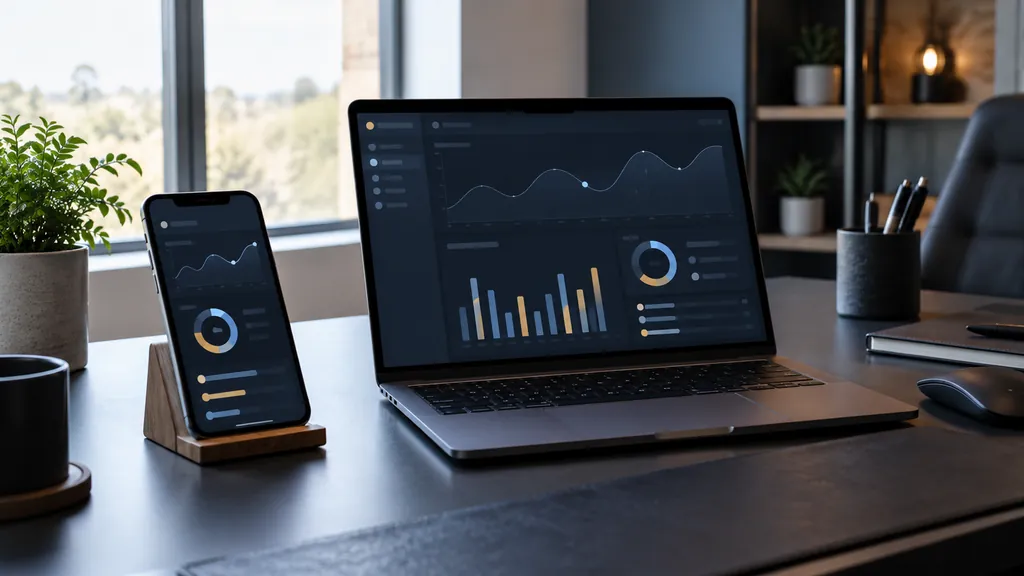
An R6 tracker app can be a website, a desktop program that runs beside Siege, or something on your phone, and picking the wrong type is the most common reason people give up on tracking. Each kind shows Siege player stats in a different way, asks for different things from you, and carries different risks. Knowing the difference saves you from installing something you don’t need.
This is the complete guide. We’ll cover the three main types of tracking app, the features that genuinely help you improve, the ones that mostly look nice, how these tools get their numbers, and how to choose one without putting your Ubisoft account on the line. By the end you’ll know exactly which setup fits the way you play.
What an R6 tracker app actually does
At its core, every R6 tracker app does one job. It takes raw numbers from your matches and turns them into something you can read at a glance. Kills and deaths become a K/D ratio. Wins and losses become a win rate. Headshot kills become a headshot percentage. Some tools add Operator, map and mode breakdowns on top.
The formulas are simple, and a good tracking app shouldn’t hide them.
- K/D = kills ÷ deaths
- Win rate = wins ÷ (wins + losses) × 100
- Headshot % = headshot kills ÷ kills × 100
- Kills per round = kills ÷ rounds
What differs between one tracking app and another is where the numbers come from, how fresh they are, and how much context sits around them. Those three things decide whether your Siege player stats help you play better or just feed your ego after a good night. Our R6 stats explained guide goes deeper on what each number means.
The three types of R6 tracker app
Almost every R6 tracker app you’ll find falls into one of three groups. They overlap a little, but the split is useful when you’re deciding what to try.
Web trackers in your browser
Web trackers are sites you open in any browser. Tracker Network’s R6 Tracker on tracker.gg is the best-known example, showing ranks, win rate, K/D, headshot percentage, match scorecards, map and mode breakdowns and Operator stats for public profiles. You search a username and platform, and the page shows the Siege player stats it has. Nothing to install, and it works on PC, Mac, phone or tablet.
Siege Tracker is also a web tool, but a different kind. Instead of looking up profiles, our season tool lets you log your own numbers and watch them change over time. More on that below.
Desktop overlay apps
Desktop apps run on your PC alongside the game. The clearest example is Tracker Network’s Windows-only app on Overwolf, whose version 3.0 announcement lists match history, an advanced live scoreboard, Operator, map and weapon stats, and optional highlight clips. This kind of tracking app is PC only and doesn’t run on Xbox or PlayStation. Check current availability, since features change over time.
Mobile tracker apps
Mobile apps live on your phone. R6Stats has been described as offering iOS and Android apps, though its website returned an error when we checked in October 2026, so verify in your phone’s official store before relying on it. A phone-based R6 tracker app is handy for console players, who can’t run desktop overlays and often check stats from the couch.
Features that matter in a tracking app
Feature lists can run long. When you strip them back, a handful of things decide whether a tracking app is worth your time. Here’s what I’d look for, in rough order of importance.
- Season and lifetime split. Lifetime numbers include years of old habits. Season numbers show who you are now. A good R6 tracker app lets you see both and makes clear which is which.
- Clear data freshness. You should be able to tell when the numbers last updated. Fan-made trackers can miss matches or lag behind.
- Win rate next to K/D. K/D alone rewards baiting and passive play. Win rate shows whether your rounds actually turn into wins.
- Operator and map breakdowns. These show where your Siege player stats hide strengths and weak spots, such as a great defense record on one map and a poor one on another.
- Platform support. A Windows-only tool is useless on PlayStation. Make sure the app covers where you play.
- Privacy and control. You should know what the tool stores and be able to delete it.
If you want to dig into Operator numbers specifically, our Operator stats comparison tool lets you put up to five Operators side by side using your own figures.
Features that look good but matter less
Some features sell an R6 tracker app well in screenshots but rarely change how you play. They aren’t bad. They just shouldn’t be the reason you pick one tool over another.
- Global percentiles. Being in some top slice of a tracker’s users sounds exciting, but it only covers players that tracker has seen, not the whole player base.
- Flashy profile cards. Nice for sharing, useless for improving.
- Live numbers mid-round. In Ranked, your attention belongs on droning, utility and crosshair placement. Many players end up checking between rounds anyway.
- Huge lifetime totals. Thousands of kills from years ago tell you very little about this season.
The best tracking app is often the plainest one, as long as it shows the right numbers clearly and lets you compare one week to the next.
How an R6 tracker app gets its numbers
This part trips up a lot of players. Ubisoft hasn’t documented an official public API for Siege stats, so third-party trackers are fan-made and gather their data in their own ways. That’s why they can miss data, update late or disagree with each other. SiegeGG has noted that platform data may not sync instantly.
Ubisoft does run its own official stats page on ubisoft.com, which you open in a browser and sign in to. It’s worth checking that page directly, since it’s the source closest to the game for your own Siege player stats. After every Ranked match, the post-match report also shows how many Rank Points you gained or lost.
Siege Tracker takes a different route. It doesn’t pull live data from Ubisoft at all. You type in your own numbers from Ubisoft’s official stats page, post-match screens or any tracker you use, and the Siege Tracker season tool saves them as snapshots. It then shows K/D, win rate, headshot percentage, kills per round, rank progress, session changes and trend charts. Your data stays in your browser, with export, import and delete options.
Why would anyone pick manual entry? Because you control the source and the timing. Your Siege player stats stay consistent from snapshot to snapshot, and nothing depends on a tracker’s servers being up that day.
Matching an R6 tracker app to your goal
Before you compare logos and feature lists, decide what you want the tool to do for you. Different goals point to different kinds of R6 tracker app, and choosing by goal stops you collecting tools you never open.
- Climbing in Ranked. Watch Rank Points and win rate over weeks. A personal season log or a web tracker with a season view does this well.
- Sharpening your aim. Track headshot percentage and kills per round across a few dozen matches, since one night tells you almost nothing.
- Building an Operator pool. Look for Operator breakdowns so you can see which attackers and defenders you actually win with.
- Scouting teammates. A web tracker that looks up public profiles is the right fit here, and nothing needs installing.
- Reviewing matches on PC. A desktop tracking app with match history may suit you, as long as it comes from the developer’s official source.
Most players have two of these goals at once. That’s fine. One tool for lookups and one for your own Siege player stats is a common and sensible pairing, and it keeps each tool doing the job it does best.
Privacy and what a tracking app stores
Tracking tools handle data in very different ways, and it’s worth a minute to understand what you’re agreeing to. Web trackers show public profiles, which means anyone who knows your username and platform can usually look up the same numbers you see. That’s normal, but it’s good to know.
A desktop or mobile tracking app may ask you to create an account, which can mean storing your email and settings on the developer’s servers. Read the privacy policy before you sign up, and use a unique password for that account rather than reusing your Ubisoft one.
Siege Tracker keeps things simpler. There’s no sign-up, and your season log stays in your own browser. You can export it as a backup, import it on another device, or delete it whenever you like. That makes it a low-risk R6 tracker app alternative if privacy matters to you.
Choosing an R6 tracker app safely
Most tracking app options are harmless. The risks come from fakes, copycats and tools that promise more than stats. A few checks keep you safe whichever type you choose.
Check where it comes from
Get desktop software from the developer’s own site and phone apps from the official App Store or Google Play. Search by the developer’s name rather than clicking the first sponsored result. Copycat listings often borrow an icon and a name, but the publisher field is harder to fake.
Watch what it asks for
A real tracking app needs your public username and platform, and maybe an account with the app itself. It never needs your Ubisoft password. Ubisoft says its own representatives will never ask for your password or login details, so no third party has a reason to. If anything asks, close it.
Read what it promises
Ubisoft’s Player Protection Core Rules ban installing, running or using programs designed to give unfair advantages, and penalties can go up to a permanent ban on all accounts. The rules don’t name trackers or overlays, and Ubisoft hasn’t said it allows or bans any particular one. Stick to a tracking app that shows your stats and history. Anything that promises hidden information, aim help or “rank boosts” is a different category entirely.
Finally, turn on 2-step verification for your Ubisoft account. It can use an authenticator app, email or SMS, and you get six single-use recovery codes. Do that once and every R6 tracker app you try becomes lower risk.
Comparing R6 tracker app types side by side
Here’s how the three types of tracking app stack up, along with Siege Tracker’s own approach. Use it to match a tool to your platform and your goal.
| Type | Example | Platforms | Strength | Limit |
|---|---|---|---|---|
| Web tracker | R6 Tracker on tracker.gg | Any browser | Look up any public profile | Can lag or miss data |
| Desktop overlay | Tracker Network on Overwolf | Windows PC only | Match history, live scoreboard | Install needed, no console |
| Mobile app | R6Stats, check availability | iOS or Android | Quick lookups on the go | Availability can change |
| Personal season log | Siege Tracker season tool | Any browser | Your own trends over time | You enter the numbers |
Plenty of players mix and match. A web tracker for looking up teammates, a personal log for your own progress, and maybe a desktop tracking app if you’re on PC and like match history in a side window. If you’re still deciding about installing something, read our guide to a safe R6 tracker download first, and if the live scoreboard is what draws you in, our explainer on how stat overlays work covers the fair-play side.
Reading Siege player stats without fooling yourself
Even the best R6 tracker app can mislead you if you read it badly. These are the traps I see most often.
- Tiny samples. Ten matches can swing your K/D wildly. Judge trends over dozens of matches, not one night.
- K/D without win rate. For example, Player A might hold a 1.3 K/D but a win rate under 50%. That often means kills come late in lost rounds or from passive play rather than winning fights that matter.
- Headshot % out of context. Some Operators and weapons naturally produce more headshots. Compare like with like.
- Mixing modes. Quick Match, Unranked and Ranked play differently. Keep them separate where your tool allows it.
- Mixing platforms. PC and console ranks are separate, so keep PC and console Siege player stats apart too.
For a structured way to read a full profile on any tracker, our older guide on how to read an R6 player profile walks through it section by section. If you just want to check six numbers right now, the stat analyzer on our player stats page does the math instantly.
R6 tracker app FAQ
What is the best R6 tracker app for console?
Desktop overlays don’t run on Xbox or PlayStation, so console players usually choose between a web tracker and a mobile app. Web trackers work in any phone or laptop browser, and our guide to checking Siege stats on your phone shows how. Some third-party phone apps exist, so check current availability. For logging your own progress, the Siege Tracker season tool works in any mobile browser.
Is an R6 tracker app safe to use?
Most are, if you get them from official sources, never enter your Ubisoft password, and avoid anything that promises unfair advantages. Ubisoft’s Core Rules ban programs designed to give unfair advantages but don’t name trackers. Turning on 2-step verification adds another layer of protection.
Why do two trackers show different Siege player stats?
Trackers are fan-made and gather data in their own ways, so they can miss matches, update at different times or count modes differently. One may show season stats while another shows lifetime totals. Pick one source and stay consistent, and check Ubisoft’s official stats page when in doubt.
Does a tracking app show my MMR?
No tool can show your current hidden MMR, because Ranked 3.0 removed hidden MMR and matchmaking now uses Rank Points only. What you can track is your RP and rank over time. The post-match report shows how many Rank Points you gained or lost after each Ranked match.
Do I need to install anything to track my stats?
No. Web trackers and Siege Tracker both run in a browser, so you can check Siege player stats without installing an R6 tracker app. Siege Tracker has no download, no store app and no overlay. You can add it to your phone’s home screen from the browser menu so it opens with one tap.
Building an R6 tracker app setup that works for you
There’s no single perfect tool. Pick the type that matches your platform, check the features that actually matter, and install only from official sources. For most players, a web tracker for lookups plus a personal log for progress covers everything. PC players who want match history in a window can add a vetted desktop tracking app on top.
Siege Tracker is independent and not affiliated with Ubisoft, and we never ask for your password. When you’re ready to start, open the season tool, save a snapshot of your current numbers, and come back after your next session to see what changed. If you want a broader view of tools beyond apps, our R6 stats tracker guide is a good next step.